

Frequently Asked Questions
How is Systemic Enzymes Taken
Systemic enzymes must be taken on an empty stomach so they enter the bloodstream rather than being used for digestion.
What Systemic Enzymes is not
Systemic Enzymes is NOT:
- A pain reliever
- A blood thinner drug
- A stimulant
- A digestive aid
It works by removing inflammatory debris so the body can heal itself.
How Systemic Enzymes fits into a system
Systemic Enzymes works after digestion.
Colon Health clears waste.
Digestive Enzymes break down food.
Systemic Enzymes clean the blood and tissues.
This completes the terrain cycle:
Digest → Eliminate → Circulate → Heal
Who Systemic Enzymes is for
Systemic Enzymes is ideal for people who:
- Have chronic inflammation
- Experience poor circulation
- Are recovering from injury or surgery
- Are physically active or athletic
- Feel "sludgy," swollen, or inflamed
It is especially powerful when digestion and elimination have already been supported.
What changes when Systemic Enzymes is working
People commonly notice:
- Less joint and tissue stiffness
- Reduced swelling
- Faster recovery after exertion
- Warmer hands and feet
- Improved energy
- Less chronic inflammation
These are signs that blood flow and immune clearance are improving.
How Systemic Enzymes works
Systemic Enzymes works in three biological phases:
PHASE 1 — Protein Debris Is Dissolved
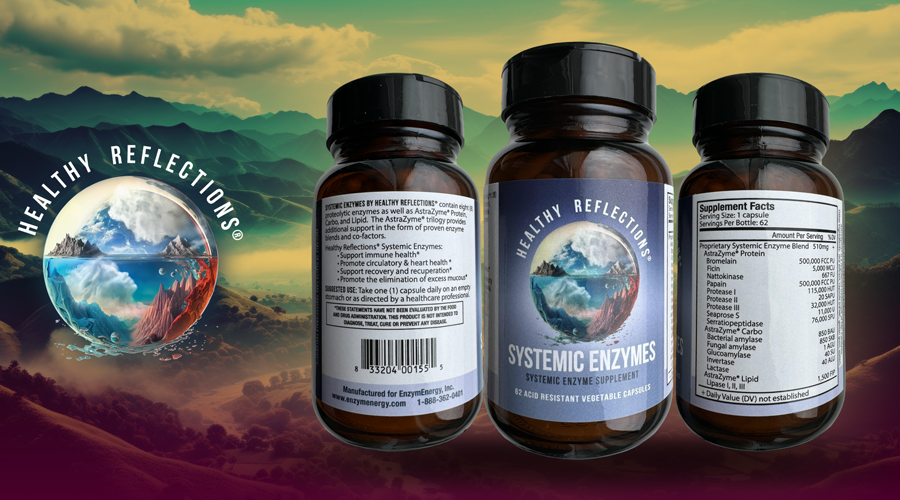
This formula contains a broad spectrum of proteolytic enzymes:
- Bromelain
- Papain
- Ficin
- Multiple Proteases
- Serrapeptidase
- Seaprose S
- Nattokinase
These enzymes circulate through the bloodstream and:
- Break down excess fibrin
- Digest inflammatory protein fragments
- Reduce immune-complex buildup
- Improve blood viscosity
This helps restore cleaner, more fluid circulation.
PHASE 2 — Immune Complexes Are Cleared
When partially digested proteins and microbial fragments circulate, the immune system forms immune complexes that lodge in tissues and joints.
AstraZyme® Protein, Carbo, and Lipid help:
- Complete digestion of residual proteins, carbohydrates, and fats
- Reduce the formation of new immune complexes
- Improve nutrient absorption and metabolic balance
This reduces immune system overload and chronic inflammatory signaling.
PHASE 3 — Circulation and Oxygen Delivery Improve
As fibrin and debris are cleared:
- Capillaries open
- Oxygen delivery increases
- Waste removal improves
- Healing accelerates
This is why systemic enzymes are often associated with:
- Reduced swelling
- Faster recovery
- Improved circulation
- Less tissue stiffness
The core problem Systemic Enzymes addresses
Most chronic inflammation, poor circulation, and slow healing are NOT caused by "aging."
They are caused by:
- Excess fibrin and protein debris in the blood
- Circulating immune complexes
- Poor micro-circulation
- Chronic immune activation
When the blood becomes thick with debris, oxygen delivery drops, tissues inflame, and healing slows.
What Systemic Enzymes is
Systemic Enzymes is a circulating enzyme system designed to reduce inflammatory debris, support healthy blood flow, and help the immune system clear waste and immune complexes from the bloodstream.
- It is NOT a digestive enzyme.
- It is NOT a painkiller.
It works inside the blood and tissues after absorption.